
2026-07-13
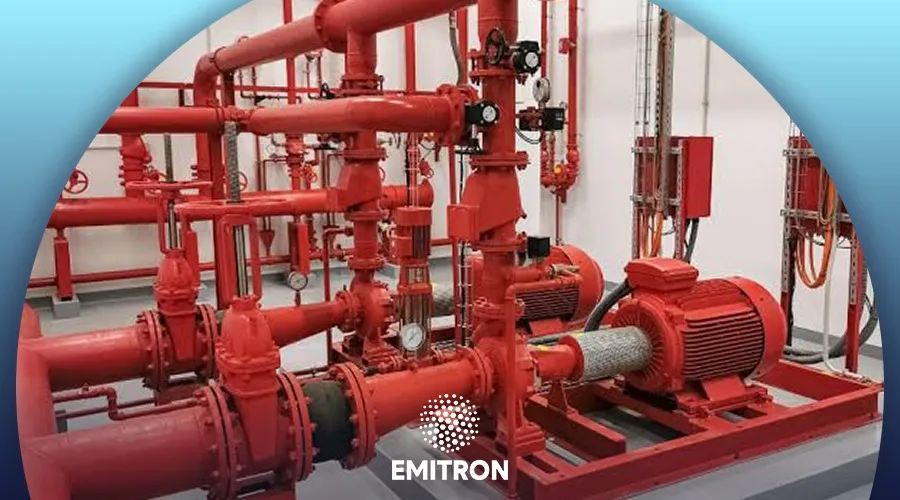
Fire pumps are not just equipment installed inside a separate room in a building; they are the essential element that ensures water reaches the required pressure at a moment when no delay can be tolerated.
When a fire breaks out, having sprinkler networks or fire hoses alone is not enough. There must be a system capable of delivering water quickly and efficiently to every point that requires firefighting support.
In this article, we will discuss the importance and types of fire pumps (including electric and diesel pumps), the difference between UL-certified and non-certified pumps, and explain the functions of control panels. We will also review the factors affecting fire pump prices in Egypt and how to choose the most suitable system for your facility.
Fire pumps are among the most important components of fire protection systems because they are responsible for supplying sprinkler networks and fire hose cabinets with water at the required pressure during emergencies.
The pump works by drawing water from a fixed source, such as a water tank, and then pumping it through the fire protection network to reach firefighting points with the required efficiency.
The pump size and capacity are determined based on the building’s engineering design, area, usage type, fire protection network distribution, and whether the system relies on sprinklers, fire hose cabinets, or other firefighting points.
Therefore, the absence of fire pumps or selecting an unsuitable pump may reduce the system’s ability to deal with fires, even if other network components are available.
With Emitron, you can implement certified fire pump systems based on your facility’s actual requirements, starting from site assessment and calculating the required pressure and flow rate, through supply, installation, and testing, ensuring that the firefighting system operates efficiently when needed.
Certified fire pumps vary according to the operating power source and motor type. Selecting the suitable pump depends on the building type, fire protection network size, and electricity availability.
The facility must also consider the nature of potential risks and select suitable fire extinguishing solutions alongside the pump system to ensure complete firefighting capability.
Usually, facilities use one main pump to provide the required water pressure during emergencies, with an additional backup pump in some cases.
Electric fire pumps operate using an electric motor and are commonly used to provide the required pressure inside the fire protection network when sprinklers or fire hose cabinets are activated.
These pumps are known for their efficiency and easy operation. However, they require a stable electricity supply, making them less suitable for locations experiencing frequent power outages.
Diesel fire pumps operate through a diesel engine and are commonly used as backup or supporting pumps when electrical power is unavailable.
Their presence ensures continuous water supply through the firefighting network during emergencies, making them essential in facilities requiring high levels of safety and reliability.
A jockey pump is a small pump used to maintain water pressure inside the fire protection network when there is a slight pressure drop, such as minor leaks or normal pressure loss.
It helps prevent unnecessary operation of the main pump, maintaining system efficiency and reducing stress on the primary pumps.
Fire pumps are essential elements in fire protection systems for residential, commercial, and industrial buildings because they ensure the availability of water at the correct pressure during emergencies.
Their importance is not limited to operating the firefighting network; they also contribute to protecting lives, reducing losses, and supporting compliance with safety requirements.
The importance of fire pumps includes:
Fire pumps help deliver water quickly during a fire, supporting rapid control of the hazard and protecting occupants.
The faster water reaches the fire with proper pressure, the greater the chance of limiting fire spread and reducing property damage.
Having an effective firefighting system, including fire pumps, is an important requirement in many facilities before operation.
Fire pumps provide the required readiness to handle emergencies, giving employees and visitors greater confidence inside the facility.